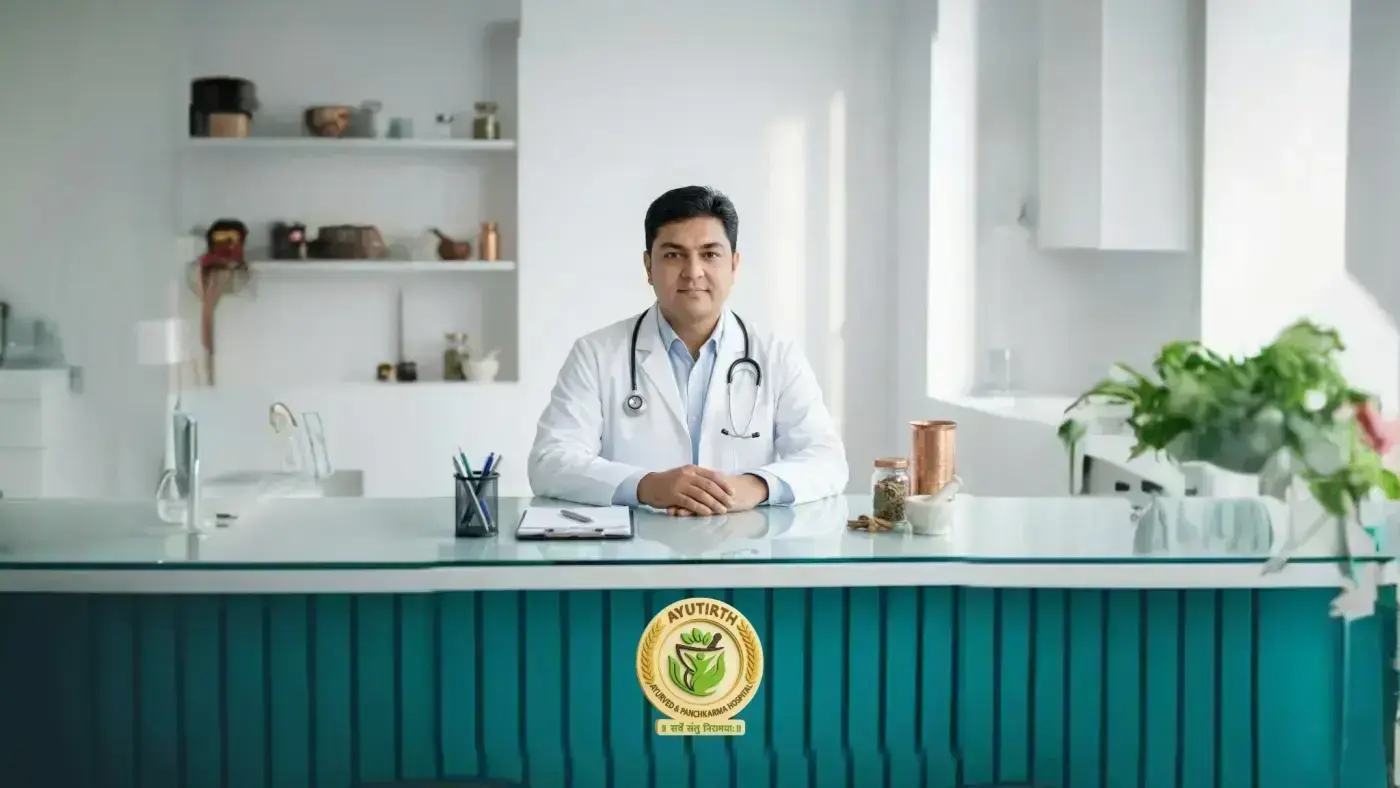
Classical Ayurvedic para-surgical treatment for knee osteoarthritis, cartilage degeneration and chronic knee disorders — without surgery or steroids.
Knee pain is one of the most common and debilitating conditions affecting adults in Ahmedabad and across India. Whether caused by osteoarthritis, cartilage degeneration, post-injury damage or simply years of wear and tear, chronic knee pain can severely limit mobility and quality of life. Conventional medicine typically offers painkillers, physiotherapy, steroid injections and — in advanced cases — total knee replacement surgery. Many patients find that these approaches provide only temporary relief while carrying significant risks or side effects.
Agnikarma therapy offers a radically different approach — one rooted in classical Ayurvedic science and validated by thousands of years of clinical application. In the context of knee pain, Agnikarma is applied to the precise anatomical points around the knee joint — including Marma points (vital energy points), trigger points within the periarticular muscles and the joint margins themselves — using a heated therapeutic instrument. The controlled application of therapeutic heat produces a cascade of healing responses in the local tissues.
According to Ayurveda, knee joint disorders primarily arise from aggravated Vata dosha combined with the accumulation of Ama (metabolic toxins) in the joint space. Vata governs all movement and sensation in the body; when disturbed, it causes dryness of joint fluid (Shleshaka Kapha), degeneration of cartilage, inflammation of the synovial membrane and pain along the nerve pathways. Agnikarma therapy directly counteracts aggravated Vata through therapeutic heat — the single most effective antidote for Vata-predominant disorders.
At Ayutirth Ayurved & Panchkarma Hospital in Gota, Ahmedabad, Dr Harshad Solanki has treated hundreds of patients with knee pain of varying severity using Agnikarma therapy — from early-stage osteoarthritis with intermittent pain to Grade 3 and Grade 4 arthritis with severe cartilage loss and functional limitation. Many of these patients came after failing to find adequate relief through physiotherapy, NSAID medications and repeated steroid injections. A significant number had been advised for knee replacement surgery and sought a natural alternative.
The results have been consistently encouraging. Most patients experience meaningful reduction in pain and improvement in walking distance, stair-climbing ability and morning stiffness after just 3–5 sessions. Many achieve sustained relief for 12–18 months or more after a complete course of treatment, particularly when combined with appropriate Ayurvedic medicines and dietary modifications. While Agnikarma cannot regenerate already-lost cartilage in the most advanced cases, it can dramatically reduce pain, improve function and delay or avoid the need for surgery in a large proportion of patients.
If you are suffering from knee pain in Ahmedabad and wish to explore a genuine Ayurvedic alternative to surgery or steroids, we invite you to call our clinic or WhatsApp us to schedule a personal consultation with Dr Solanki.
Knee osteoarthritis is graded by severity from Grade 1 (early) to Grade 4 (advanced). Agnikarma therapy is beneficial across all grades, with the best outcomes in Grades 1–3.
Minor bone spur formation. Joint space is preserved. Occasional stiffness and pain after activity. X-ray shows minimal changes.
Visible bone spurs. Slight narrowing of joint space. Pain on stairs, prolonged walking. Morning stiffness lasting under 30 minutes.
Visible cartilage damage. Moderate joint space narrowing. Daily pain affecting walking, sitting and climbing. Possible joint swelling.
Significant cartilage loss. Bone-on-bone contact. Marked deformity, severe pain and severely limited mobility. Surgery commonly advised.
Agnikarma is effective across a broad range of knee conditions — not only osteoarthritis. Dr Solanki determines suitability at the initial consultation.
The most common indication for Agnikarma. Addresses cartilage degeneration, joint inflammation, stiffness and reduced mobility associated with age-related or post-traumatic arthritis.
Agnikarma reduces chronic inflammation, morning stiffness and synovial swelling in rheumatoid-affected knees when used alongside appropriate Ayurvedic medicines.
Chronic knee pain following meniscal injuries, ligament sprains (ACL/PCL) or post-surgical residual pain responds well to targeted Agnikarma application.
Pain behind or around the kneecap during activity, stair-climbing or prolonged sitting — a common condition in young and middle-aged adults that responds well to Agnikarma.
Inflammation of the bursae or tendons around the knee — often caused by overuse, obesity or repetitive stress — is effectively resolved with precise Agnikarma application.
Persistent pain following knee replacement surgery (residual soft-tissue or nerve pain) can also be addressed with Agnikarma when conventional post-surgical care has not resolved symptoms.
Each session at Ayutirth Ayurveda is conducted personally by Dr Harshad Solanki in a clean, professional clinical environment.
Dr Solanki performs a comprehensive examination of the knee — assessing range of motion, tenderness, swelling, crepitus and functional limitation. He reviews X-rays or MRI reports and takes a complete history of the complaint, previous treatments and medications. This allows him to grade the severity and determine whether Agnikarma is indicated and what instrument and technique is most appropriate.
The specific points to be treated are carefully identified — typically the most tender periarticular points, the medial and lateral joint margins, specific Marma points, and any trigger points within the muscles surrounding the knee. These are marked for accurate treatment.
The knee is cleansed and a light application of medicated Ayurvedic oil appropriate for the patient's constitution and condition is made to the area. This reduces sensitivity, conditions the skin and prepares the local tissues for the therapeutic procedure.
The selected instrument — heated to precise therapeutic temperature — is applied to each identified point with a controlled, brief contact. The procedure takes 10–15 minutes per knee. Patients typically experience a momentary sensation of heat at each point, followed immediately by a feeling of warmth and relief. No incision is made; the procedure is entirely percutaneous.
Medicated Ayurvedic ghee (Jatyadi Ghrita or similar) is applied to the treated points to soothe the skin and promote rapid healing of the treated sites. The patient rests briefly in the clinic before being discharged. Small reddish marks at each treatment point typically heal within 3–5 days.
Dr Solanki provides personalised Pathya (dietary and lifestyle guidance) to support healing between sessions. This typically includes foods to favour and avoid, activity modifications and any adjunct Ayurvedic medicines. Follow-up sessions are scheduled at weekly intervals. Most patients require 5–7 sessions for Grade 2–3 osteoarthritis; fewer for milder cases.
Understanding how Agnikarma compares to the alternatives can help you make an informed decision about your knee care.
| Criterion | Agnikarma Therapy | Steroid Injections | Physiotherapy | Knee Replacement |
|---|---|---|---|---|
| Nature | Natural, Ayurvedic | Pharmaceutical | Physical | Surgical |
| Pain Relief Speed | ✔ Within 1–2 sessions | ✔ Immediate | ✘ Weeks to months | ✔ Post-recovery |
| Duration of Relief | ✔ 12–24 months+ | ✘ 4–12 weeks | Varies widely | ✔ Long-term |
| Repeat Treatments | Once a year or less | Every 3–4 months | Ongoing sessions | Revision after 15–20 yrs |
| Side Effects | ✔ Minimal | ✘ Cartilage thinning with repeat use | ✔ Minimal | ✘ Surgical risks, infection, DVT |
| Hospitalisation | ✔ Not required | ✔ Not required | ✔ Not required | ✘ 3–5 days required |
| Cost | ✔ Affordable | Moderate | Ongoing cost | ✘ Very high |
| Addresses Root Cause | ✔ Yes — Vata & Ama | ✘ Symptomatic only | Partially | Mechanically only |
An ancient solution that modern patients are rediscovering — Agnikarma offers a comprehensive set of advantages specifically for knee pain sufferers.
Many patients advised for total knee replacement have avoided or significantly delayed surgery through a complete course of Agnikarma therapy combined with Ayurvedic medicines.
Most patients report significant and measurable reduction in knee pain — often improving pain scores from 7–8/10 to 2–3/10 — after their first 3 sessions.
Walking distance, stair-climbing ability and the capacity to sit cross-legged or squat all improve progressively over the course of treatment.
Unlike repeated steroid injections — which can accelerate cartilage degeneration — Agnikarma achieves its effect entirely through therapeutic heat and the body's own healing response.
Unlike oral medications that act systemically, Agnikarma delivers its therapeutic effect precisely to the affected knee joint — maximising efficacy and minimising any systemic impact.
Classical Ayurvedic texts state that conditions cured by Agnikarma do not recur. Clinical experience shows that one complete course provides relief for 12–24 months in the majority of patients.
BAMS · Keralian Panchkarma Specialist · Founder, Ayutirth Ayurveda
Dr Harshad Solanki is one of Ahmedabad's most experienced Ayurvedic physicians for musculoskeletal and joint disorders, with over 13 years of specialised clinical practice in Panchkarma therapies and Ayurvedic pain management. His expertise in Agnikarma therapy — particularly for knee disorders — has helped hundreds of patients in Ahmedabad and across Gujarat find lasting relief from knee pain without surgery.
Dr Solanki completed his BAMS degree and subsequently pursued advanced postgraduate training in Keralian Panchkarma — one of the most rigorous and respected Ayurvedic therapy systems — gaining deep expertise in classical treatment protocols for joint, spine and musculoskeletal disorders. His approach to knee pain combines precise Agnikarma technique with complementary Panchkarma therapies (Janu Basti, Abhyanga, Pinda Sweda), Ayurvedic medicines and personalised dietary guidance to achieve comprehensive and durable results.
Hear directly from a patient who experienced lasting knee pain relief through Agnikarma therapy at Ayutirth Ayurveda, Ahmedabad.
A patient shares their experience after a complete course of Agnikarma knee therapy at Ayutirth Ayurveda, Gota, Ahmedabad.
Answers to the questions we hear most often from patients considering Agnikarma therapy for their knee pain.
This is the most common question we receive at Ayutirth Ayurveda, and the answer is: for many patients, yes. A significant proportion of patients who have been advised for knee replacement — particularly those with Grade 2 and Grade 3 osteoarthritis — have achieved sufficient pain relief and functional improvement through Agnikarma therapy to comfortably delay or entirely avoid surgery. Even for Grade 4 (bone-on-bone) arthritis, Agnikarma can meaningfully reduce pain and improve quality of life.
The key is early treatment. The sooner you start, the better the outcome and the less damage there is to reverse. We strongly encourage anyone who has been advised for surgery to consult with Dr Solanki for an honest, personalised assessment before making a decision.
The number of sessions depends on the grade and chronicity of your knee condition. As a general guide: Grade 1 osteoarthritis typically responds in 3–5 sessions; Grade 2 in 5–7 sessions; Grade 3 in 7–10 sessions; and Grade 4 may require 10 or more sessions over 2–3 months. Sessions are spaced one week apart to allow the tissue to heal and respond between treatments. Dr Solanki reviews progress at every session and adjusts the plan accordingly.
The procedure causes a brief, momentary sensation of sharp heat at each treatment point — lasting only a fraction of a second per point. Most patients find it significantly more tolerable than they expected. There is no sedation required. After the session, the treated area may feel warm or slightly tender for 24–48 hours. Most patients are able to walk out of the clinic, drive home and resume light daily activities. We recommend avoiding strenuous exercise, cold water application to the knee and prolonged standing for 48 hours after each session.
Yes, and this is actually our standard approach at Ayutirth Ayurveda. Agnikarma works most effectively when combined with complementary Panchkarma therapies — particularly Janu Basti (medicated oil pooling in the knee joint), Pinda Sweda (hot herbal bolus fomentation), and Abhyanga (medicated oil massage). Oral Ayurvedic medicines to address Vata dosha, reduce Ama and support joint tissue nutrition are also typically prescribed. This combined approach produces faster and more sustained results than Agnikarma alone.
Agnikarma is generally safe for elderly patients and can be particularly valuable for this group, who often cannot tolerate surgery or long-term NSAID use. However, diabetic patients with poorly controlled blood sugar or compromised wound healing require special caution, as slow healing of the treatment sites is a concern. Dr Solanki evaluates each patient thoroughly — including their blood glucose control — before proceeding. For well-controlled diabetics, Agnikarma can be performed safely with appropriate precautions and follow-up wound care.
The classical Ayurvedic texts state that conditions cured by Agnikarma do not recur — and clinical experience at Ayutirth Ayurveda bears this out in a large proportion of patients. Most patients who complete a full course of treatment experience relief lasting 12–24 months, and many maintain their improvement even longer with appropriate diet, exercise and lifestyle modifications. In progressive conditions like severe osteoarthritis, a repeat course may be needed annually. This is still far less frequent than the 4–6 weekly steroid injections that many patients resort to.
You do not need to abruptly stop your current medications before starting Agnikarma therapy. Dr Solanki will review your current medications at the consultation and advise accordingly. In most cases, you continue your existing medications while starting Agnikarma, and the doses are gradually tapered as your pain improves. Blood-thinning medications (like warfarin or aspirin) may require adjustment — always inform Dr Solanki of all medications you are taking.
Ayutirth Ayurved & Panchkarma Hospital is located in Gota, Ahmedabad — a well-connected location accessible from Chandkheda, Motera, Nirnaynagar, Sola, Thaltej, SG Road and Science City Road. Patients regularly travel to us from Bopal, Satellite, Maninagar, Vatva, Naroda and surrounding areas for Dr Solanki's specialised Agnikarma treatments. Please see the clinic map below for directions, or call us at +91 98246 54364 for route guidance.
Ayutirth Ayurved & Panchkarma Hospital
Gota, Ahmedabad, Gujarat
Mon – Sat: 9:00 AM – 7:00 PM
Sunday: By appointment only
Accessible from Chandkheda, Motera, Sola, Thaltej, SG Road, Nirnaynagar & Science City Road
Consult Dr Harshad Solanki for personalised Agnikarma therapy and Ayurvedic knee pain management — without surgery or steroids.