Diabetes Mellitus — known in classical Ayurveda as Madhumeha (meaning "honey urine") — is one of the most prevalent chronic metabolic disorders affecting millions across India. While modern medicine primarily manages diabetes through lifelong oral hypoglycaemic medications or insulin therapy, these approaches often fail to address the underlying metabolic imbalance. Ayurveda offers a profoundly different and complementary approach — one that targets the root cause of the disease.
According to Ayurvedic understanding, Madhumeha arises from an imbalance of Kapha dosha combined with the accumulation of Ama (metabolic toxins) in the body's channels (Srotas), impaired digestive fire (Mandagni), and derangement of the fat and muscle tissues (Meda and Mamsa dhatus). This metabolic dysfunction leads to impaired glucose utilisation, insulin resistance, and the progressive deterioration of organs — particularly the kidneys, eyes, nerves and heart. The Ayurvedic approach addresses all of these dimensions simultaneously.
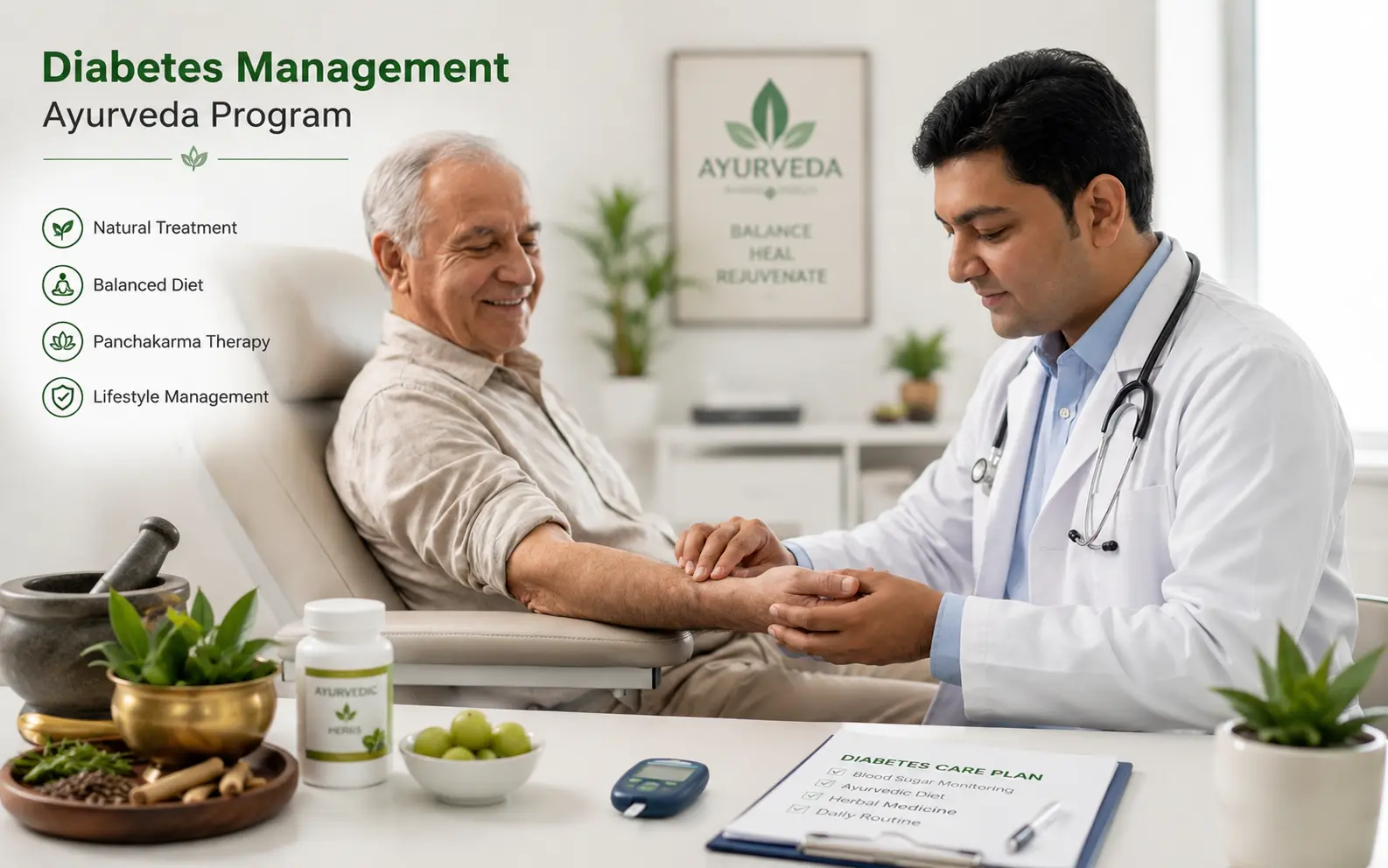
At Ayutirth Ayurved & Panchkarma Hospital in Gota, Ahmedabad, Dr Harshad Solanki has developed a structured, comprehensive Diabetes Management Ayurveda Program that combines classical Ayurvedic herbal formulations, targeted Panchkarma therapies, dietary counselling and lifestyle modification — working to restore metabolic balance, improve insulin sensitivity, reduce HbA1c levels and prevent the progression of diabetic complications — naturally and safely.
The program is carefully personalised for each patient based on their Prakriti (Ayurvedic body constitution), the severity and duration of their diabetes, current medications, associated complications, and overall health status. Most patients begin experiencing improvements in energy within the first 4–6 weeks. Meaningful reduction in HbA1c is typically seen at the 3-month mark. If you are seeking a natural, comprehensive Ayurvedic approach to managing your diabetes in Ahmedabad, call our clinic or WhatsApp us to schedule a personal consultation with Dr Solanki.
The program is effective across the full spectrum of blood sugar disorders — from pre-diabetes to advanced Type 2 Diabetes with complications. Early treatment yields the best outcomes.
HbA1c between 5.7–6.4%. Fasting blood sugar elevated but below diabetic threshold. No symptoms yet. Lifestyle changes are most impactful at this stage.
HbA1c 6.5–8.0%. Controlled with 1–2 oral medications. No significant organ complications. Pancreatic function partially preserved.
HbA1c 8.0–10%. On multiple medications. Early signs of neuropathy or nephropathy possible. Metabolic control challenging with medications alone.
HbA1c above 10%. Significant neuropathy, nephropathy or retinopathy. On insulin or multiple drugs. Quality of life compromised.
Beyond blood sugar control, the Ayurvedic Diabetes Program comprehensively addresses the full range of diabetic complications and associated metabolic disorders.
The primary indication. Classical Ayurvedic protocols with targeted herbs, Panchkarma and dietary changes achieve meaningful HbA1c reduction and metabolic stabilisation in a large proportion of patients.
Impaired fasting glucose, insulin resistance and metabolic syndrome — including central obesity, dyslipidaemia and hypertension — respond exceptionally well to Ayurvedic intervention before diabetes fully develops.
Tingling, numbness and burning in hands and feet due to nerve damage. Ayurvedic nerve-nourishing therapies (Basti, Abhyanga) combined with specific herbs significantly reduce neuropathic symptoms.
Early kidney damage (elevated creatinine, microalbuminuria) from long-standing diabetes. Ayurvedic kidney-protective herbs and Panchkarma help slow or arrest the progression of nephropathy.
Ayurvedic Netra (eye) therapies and specific herbs strengthen retinal blood vessels and support vision health in diabetic patients, complementing conventional ophthalmological care.
Elevated cholesterol, hypertension and cardiovascular risk associated with diabetes are addressed through Ayurvedic heart-protective herbs, dietary modification and appropriate Panchkarma therapies.
Central obesity and insulin resistance — the root drivers of Type 2 diabetes — are directly addressed through Ayurvedic fat metabolism-enhancing therapies, specific herbs and a personalised diet plan.
Chronic fatigue, low energy and poor sleep quality associated with diabetes — caused by impaired cellular glucose utilisation — improve significantly with Ayurvedic Rasayana (rejuvenation) therapies.
Dr Solanki prescribes personalised herbal formulations based on each patient's constitution and condition. These are time-tested classical herbs with well-documented anti-diabetic properties.
Known as the "sugar destroyer" — blocks sweet taste receptors and stimulates pancreatic beta cells. One of the most potent anti-diabetic herbs in Ayurveda.
Bitter Melon — contains insulin-like compounds (polypeptide-P) and activates AMPK pathway. Significantly reduces fasting blood sugar.
The "Kino Tree" — classical Ayurvedic anti-diabetic herb. Regenerates beta cells, improves insulin secretion and reduces post-meal glucose spikes.
Fenugreek seeds are rich in soluble fibre and diosgenin — slow glucose absorption, improve insulin sensitivity and reduce LDL cholesterol.
Turmeric's curcumin improves insulin receptor sensitivity, reduces systemic inflammation and protects kidneys and nerves from diabetic damage.
Indian Gooseberry — rich in Vitamin C and polyphenols. Reduces oxidative stress, protects pancreatic cells and improves metabolic markers.
Powerful blood purifier and hypoglycaemic agent. Neem reduces blood sugar, treats diabetic skin complications and reduces systemic Pitta inflammation.
Fulvic acid-rich Rasayana that improves mitochondrial function, enhances cellular glucose uptake and restores energy metabolism in diabetic patients.
Each patient's program is personally designed by Dr Harshad Solanki at Ayutirth Ayurveda, Gota, Ahmedabad — based on thorough assessment and individualised Ayurvedic diagnosis.
Dr Solanki conducts a thorough Ayurvedic consultation — assessing your Prakriti (body constitution), Vikriti (current imbalance), detailed history of your diabetes, current medications, dietary habits, lifestyle, and associated symptoms. He reviews your recent blood reports including fasting glucose, HbA1c, lipid profile, kidney function and any other relevant investigations to build a complete clinical picture.
Based on your assessment, Dr Solanki prescribes a personalised combination of classical Ayurvedic formulations — including single herbs, compound preparations and Rasayana (rejuvenating) medicines — specifically selected for your constitution, blood sugar levels, complications and current medication profile. These are adjusted every 4–6 weeks based on your progress reports.
For patients with established diabetes or metabolic syndrome, targeted Panchkarma therapies are recommended to clear accumulated Ama from the body's channels. This typically includes Udwartana (dry herbal powder massage to reduce Meda dhatu/fat), Virechana (therapeutic purgation to clear Pitta and Kapha), Basti (medicated enema for deep metabolic correction) and Abhyanga. These therapies profoundly improve insulin sensitivity and metabolic function.
Ayurvedic dietary management for diabetes is far more nuanced than a simple "low sugar diet." Dr Solanki provides comprehensive guidance on foods to favour (bitter, astringent and pungent tastes; whole grains; specific vegetables), foods to avoid, meal timing, portion management and meal composition — all tailored to your specific constitution and regional Gujarati dietary habits, making it far more sustainable than a standard "no carb" diabetic diet.
Lifestyle modification is integral to the Ayurvedic diabetes program. Dr Solanki provides guidance on appropriate physical activity, daily routine (Dinacharya), stress management, sleep optimisation and specific Yoga postures (asanas) and Pranayama (breathing exercises) particularly beneficial for diabetes — including Surya Namaskar, Mandukasana, Vakrasana and Bhramari Pranayama — personalised to your age, fitness level and any physical limitations.
Dr Solanki schedules regular follow-up consultations — initially every 4 weeks, then every 6–8 weeks as your condition stabilises. At each visit, he reviews your home blood sugar logs and any recent lab reports, assesses symptomatic improvement, and adjusts your herbal medicines, diet plan and Panchkarma recommendations accordingly. The goal is progressive, measurable improvement in HbA1c and overall metabolic health over 3–12 months.
Understanding how the Ayurvedic approach compares to conventional diabetes management helps you make an informed decision about your care in Ahmedabad.
| Criterion | Ayurvedic Program | Oral Medications | Insulin Therapy | Diet & Exercise Only |
|---|---|---|---|---|
| Nature | Natural, Holistic | Pharmaceutical | Pharmaceutical / Injections | Lifestyle |
| Addresses Root Cause | ✔ Yes — Ama, Kapha, Mandagni | ✘ Symptomatic only | ✘ Replaces insulin, not root cause | Partially |
| HbA1c Reduction | ✔ Meaningful over 3–6 months | ✔ Rapid initial reduction | ✔ Effective for high HbA1c | Moderate if adhered to |
| Side Effects | ✔ Minimal — natural herbs | ✘ GI issues, lactic acidosis risk | ✘ Hypoglycaemia, weight gain | ✔ None |
| Complication Prevention | ✔ Directly addresses neuropathy, nephropathy | Indirect (via glucose control) | Indirect (via glucose control) | Indirect |
| Long-Term Dependency | ✔ Reduces with time | ✘ Lifelong escalating doses | ✘ Lifelong, increasing doses | Ongoing effort required |
| Overall Well-Being | ✔ Improves energy, weight, sleep | Neutral to mild improvement | Neutral | ✔ Improves fitness |
| Cost | ✔ Affordable | Moderate, ongoing | ✘ High, ongoing | ✔ Low |
A truly comprehensive approach that goes beyond blood sugar numbers — addressing the full metabolic picture for lasting health.
Most patients on the program experience a meaningful reduction in HbA1c within 3 months — validated by blood reports, not just symptomatic improvement.
Many patients with early Type 2 diabetes achieve sufficient metabolic control to reduce or discontinue oral medications under their physician's supervision.
Fatigue, brain fog and low stamina — common complaints in diabetics — significantly improve as metabolic function is restored through the Ayurvedic protocol.
The program addresses obesity and central fat — the primary driver of insulin resistance — through Udwartana, dietary correction and metabolic herbs.
Targeted herbs and therapies specifically protect the kidneys, nerves, eyes and heart from diabetic damage — going beyond what glucose control alone achieves.
All herbs and formulations used are classical, time-tested and free from the gastrointestinal, renal and cardiovascular side effects associated with long-term pharmaceutical use.
BAMS · Keralian Panchkarma Specialist · Founder, Ayutirth Ayurveda
Dr Harshad Solanki is one of Ahmedabad's most experienced Ayurvedic physicians for metabolic and lifestyle disorders, with over 13 years of specialised clinical practice in Panchkarma therapies and Ayurvedic internal medicine. His comprehensive approach to diabetes management combines classical Ayurvedic wisdom with a thorough understanding of modern metabolic science — providing patients with a safe, evidence-informed and truly personalised treatment experience.
Dr Solanki completed his BAMS degree and subsequently pursued advanced postgraduate training in Keralian Panchkarma — gaining deep expertise in classical detoxification and rejuvenation therapies that are particularly powerful for metabolic disorders like diabetes, obesity and thyroid dysfunction. His diabetes management program has helped hundreds of patients across Ahmedabad and Gujarat achieve meaningful blood sugar control, reduce medication dependence and prevent the progression of diabetic complications.
Answers to the questions we hear most often from patients considering the Ayurvedic Diabetes Management Program at Ayutirth Ayurveda.
This depends significantly on the stage of diabetes. For patients with pre-diabetes or early Type 2 diabetes, a comprehensive Ayurvedic program combining herbal medicines, Panchkarma, dietary correction and lifestyle changes can achieve excellent blood sugar control — and in many cases, allow patients to reduce or completely discontinue oral medications under their physician's guidance.
For patients with established or advanced diabetes on multiple medications, Ayurveda works best as a complementary approach — significantly improving metabolic control, reducing complications and improving quality of life alongside conventional treatment. Dr Solanki provides an honest, realistic assessment at your first consultation based on your specific blood reports and clinical picture.
Most patients notice symptomatic improvements — better energy, reduced thirst and urination, improved digestion — within the first 4–6 weeks. Measurable improvement in fasting blood sugar is typically seen within 6–8 weeks. A meaningful reduction in HbA1c is usually documented at the 3-month follow-up. A minimum program duration of 3–6 months is recommended for substantial, lasting improvement. Patients with complications like neuropathy may require 6–12 months for significant nerve-related symptom improvement.
Yes, absolutely. The Ayurvedic Diabetes Program is designed to complement, not conflict with, your existing medications. Dr Solanki reviews your current drug regimen at the initial consultation and designs a program that works safely alongside it. As your blood sugar improves with the Ayurvedic protocol, your medications will need to be monitored closely and potentially reduced by your prescribing physician to avoid hypoglycaemia. We strongly advise all patients to continue regular blood sugar monitoring and communicate any changes to their allopathic doctor.
Panchkarma is highly recommended — particularly for patients with established diabetes, obesity, high HbA1c or significant Ama accumulation — as it dramatically enhances the effectiveness of herbal medicines by clearing the body's channels and improving metabolic function. However, not all patients require intensive Panchkarma. For patients with mild or early diabetes, a combination of herbal medicines, dietary changes and lifestyle modifications alone may be sufficient. Dr Solanki recommends Panchkarma procedures based on individual need and physical suitability.
The most commonly used herbs include Gudmar (Gymnema sylvestre), Karela (Bitter Melon), Vijaysar (Pterocarpus marsupium), Methi (Fenugreek), Haridra (Turmeric), Neem, Amalaki, and compound formulations such as Chandraprabha Vati, Nishamalaki, and Vasanta Kusumakara Rasa. However, the specific prescription is always personalised for each patient — based on their constitution, blood sugar levels, body type, associated complications and digestive strength — rather than a standard protocol applied to all diabetic patients.
Not as restrictive as many patients expect. The Ayurvedic diabetic diet focuses on food quality, combination and timing as much as on restriction. While refined sugars, processed foods, sweet fruits and cold heavy foods are reduced, there is a wide range of whole grains (especially barley and millet), vegetables, legumes, spices and preparations that are actively encouraged. Dr Solanki provides practical, culturally appropriate dietary guidance specifically tailored for Gujarati food habits — making it far more sustainable and enjoyable than a standard "no carb" diabetic diet.
Yes — diabetic neuropathy is one of the complications that responds very well to Ayurvedic management. Specific Basti (medicated enema) procedures using nerve-nourishing oils are particularly effective for peripheral neuropathy. Combined with nerve-protective herbs (Ashwagandha, Bala, Shatavari), Abhyanga with medicated oils and appropriate Agnikarma therapy for localised pain, most patients experience meaningful reduction in tingling, burning and numbness — especially when Ayurvedic treatment is started before severe nerve damage has occurred.
Ayutirth Ayurved & Panchkarma Hospital is located in Gota, Ahmedabad — easily accessible from Chandkheda, Motera, Nirnaynagar, Sola, Thaltej, SG Road and Science City Road. Patients regularly travel to us from Bopal, Satellite, Maninagar, Vatva, Naroda and surrounding areas. Please see the clinic map below for directions, or call us at +91 98246 54364 for route guidance.
Ayutirth Ayurved & Panchkarma Hospital
Gota, Ahmedabad, Gujarat — 382481
Mon–Sat: 10:00 AM – 1:30 PM & 5:00 PM – 8:30 PM
Sunday: 10:00 AM – 2:00 PM (appt only)
Accessible from Chandkheda, Motera, Sola, Thaltej, SG Road, Nirnaynagar & Science City Road
Consult Dr Harshad Solanki for a personalised Ayurvedic Diabetes Management Program at Gota, Ahmedabad — natural blood sugar control without harmful side effects.