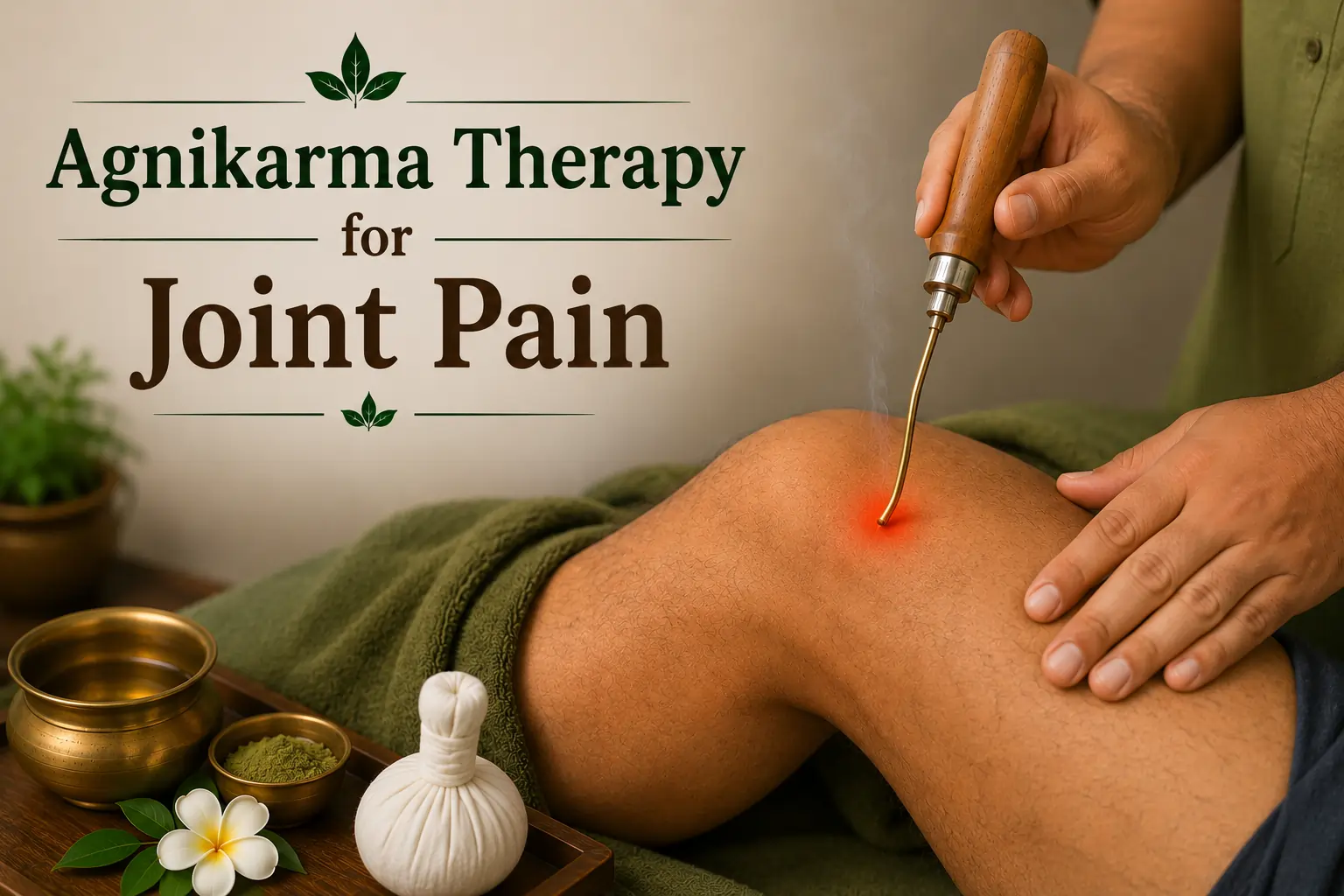
Classical Ayurvedic para-surgical Agnikarma treatment for knee osteoarthritis, slip disc and sciatica — without surgery or steroids. Serving patients across Ahmedabad, Gandhinagar & Gujarat.
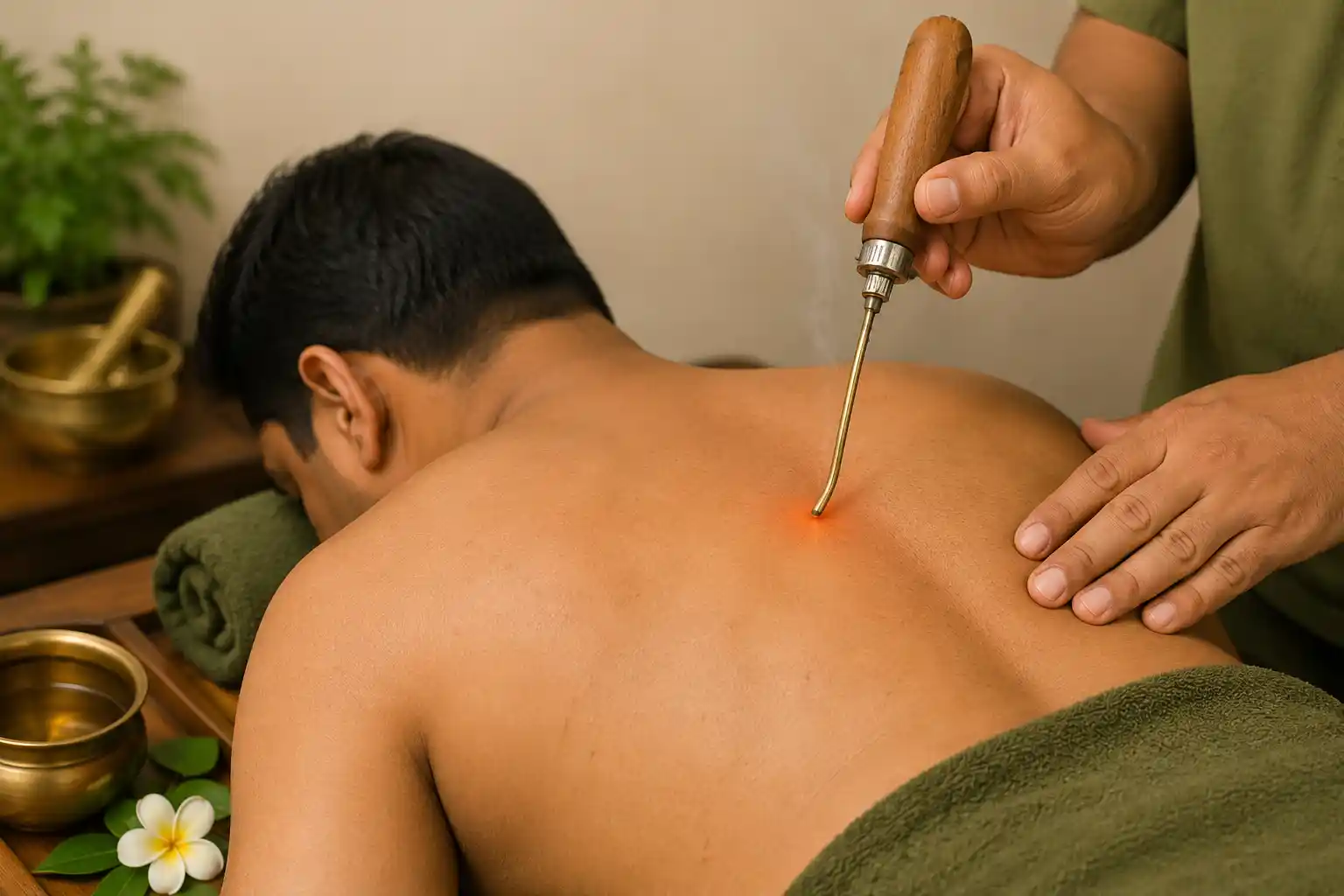
Agnikarma (अग्निकर्म) is one of the eight para-surgical procedures described in classical Ayurvedic texts — specifically in Sushruta Samhita. It involves the application of controlled therapeutic heat to precise anatomical, Marma and trigger points.
Unlike superficial heat therapies such as hot packs or infrared lamps, Agnikarma delivers therapeutic heat directly to the affected tissue — be it joint margins, nerve roots, tendon insertions or periarticular trigger points — with precision that cannot be achieved by any surface application.
Sushruta declares Agnikarma to be superior even to surgery and other Shalya procedures for certain conditions — particularly those of the joints, tendons, muscles and nerves. The classical text states: "Diseases which are not cured by medicines, not cured by Shastra (instruments), are cured by Agnikarma."
At Ayutirth Ayurved & Panchkarma Hospital in Gota, Ahmedabad, Dr Harshad Solanki practises Agnikarma in full fidelity to the classical protocol — selecting the appropriate instrument (Shalaka), heating method and treatment points based on the patient's specific condition, constitution and the nature of their pain.
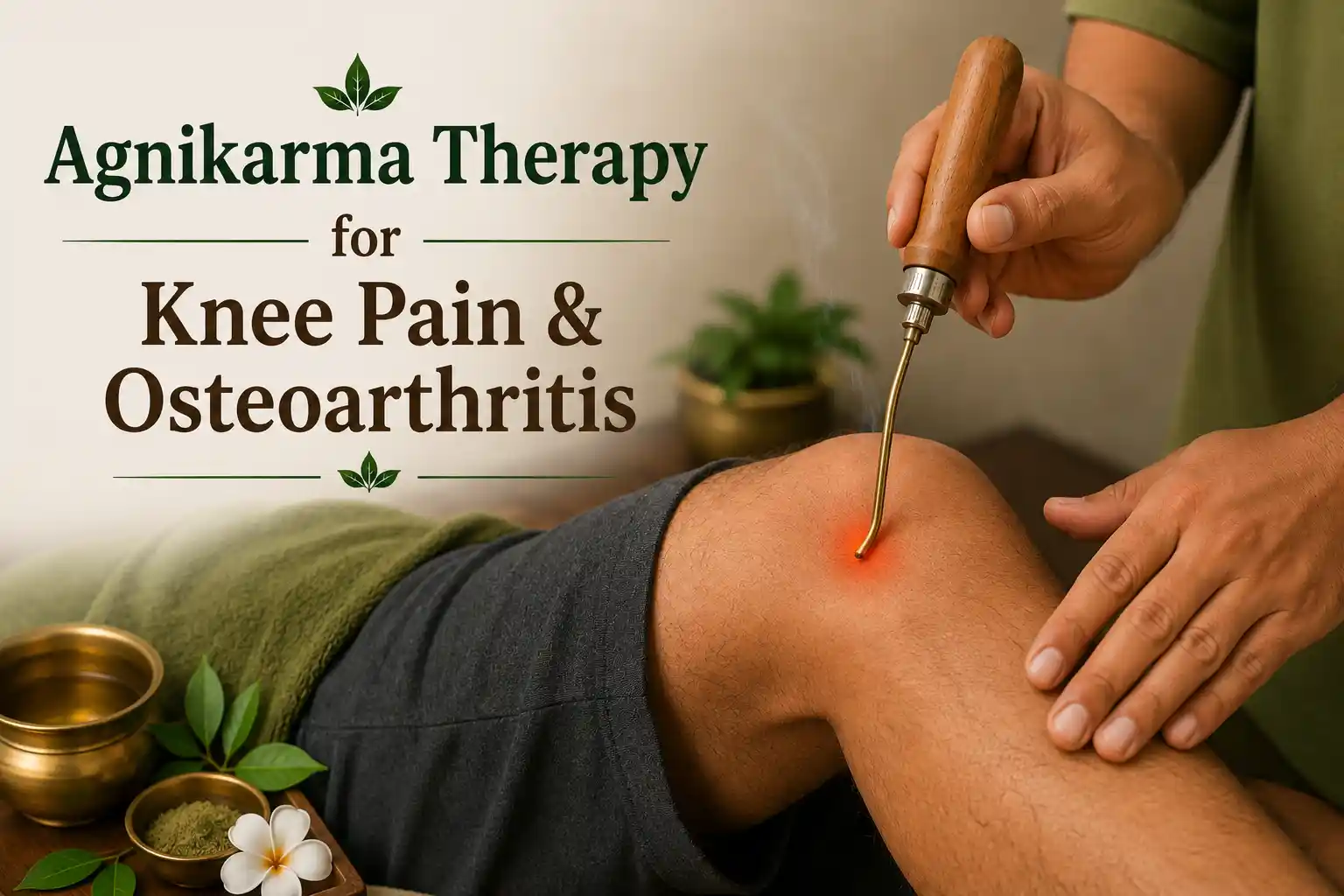
Knee osteoarthritis (Sandhivata) is the most common indication for Agnikarma at Ayutirth Ayurveda. Agnikarma is applied to precise points around the knee joint producing rapid, measurable pain relief across all grades of arthritis.
Knee pain is one of the most debilitating conditions affecting adults across Ahmedabad and India. Whether caused by osteoarthritis, cartilage degeneration, post-injury damage or years of wear and tear, chronic knee pain severely limits mobility and quality of life.
In the context of knee pain, Agnikarma is applied to the precise anatomical points around the knee joint — including Marma points (vital energy points), trigger points within the periarticular muscles and the joint margins themselves.
According to Ayurveda, knee joint disorders primarily arise from aggravated Vata dosha combined with Ama accumulation in the joint space. Agnikarma directly counteracts aggravated Vata through therapeutic heat — the single most effective antidote for Vata-predominant disorders.
Agnikarma is beneficial across all grades, with the best outcomes in Grades 1–3.
Minor bone spur formation. Joint space preserved. Occasional stiffness and pain after activity.
Visible bone spurs. Slight joint space narrowing. Pain on stairs, prolonged walking.
Visible cartilage damage. Moderate joint space narrowing. Daily pain affecting mobility.
Significant cartilage loss. Bone-on-bone contact. Marked deformity and severe pain.
The most common indication for Agnikarma. Addresses cartilage degeneration, joint inflammation, stiffness and reduced mobility.
Agnikarma reduces chronic inflammation, morning stiffness and synovial swelling alongside appropriate Ayurvedic medicines.
Chronic knee pain following meniscal injuries, ligament sprains or post-surgical residual pain responds well to targeted Agnikarma.
Pain behind or around the kneecap during activity or prolonged sitting — common in young and middle-aged adults.
Inflammation of the bursae or tendons around the knee effectively resolved with precise Agnikarma application.
Persistent pain following knee replacement surgery addressed with Agnikarma when conventional post-surgical care has not resolved symptoms.
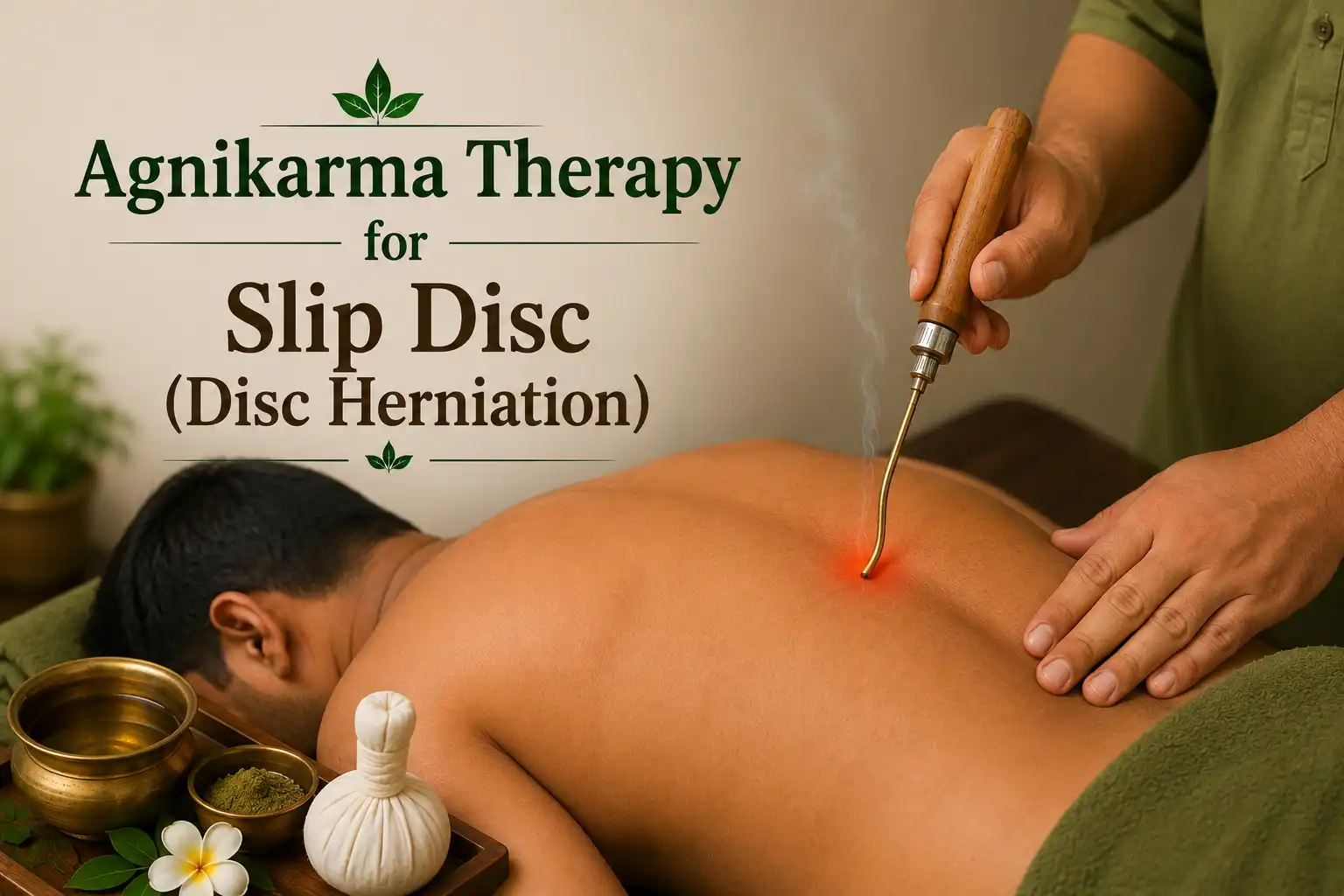
Lumbar disc herniation — popularly called slip disc — is a leading cause of severe back pain and leg pain in adults. Agnikarma applied to precise spinal and nerve root points produces rapid relief without surgery.
A slip disc occurs when the soft nucleus of an intervertebral disc protrudes through the tough outer annulus fibrosus, pressing on adjacent nerve roots and producing severe back pain, radiating leg pain, numbness, tingling and in severe cases, weakness of the leg muscles.
In Ayurveda, slip disc corresponds to Kati Vata with Gridhrasi — a severe Vata disorder affecting the lumbar spine and sciatic nerve. Agnikarma, by applying precise therapeutic heat to the specific spinal and nerve root points, directly pacifies the aggravated Vata, reduces local inflammation and re-establishes normal nerve function.
Disc pushing outward without rupture. Back pain, stiffness and early nerve irritation.
Nucleus has herniated through annulus. Nerve root compression causing radiating leg pain and tingling.
Degeneration and herniation at two or more disc levels. Chronic back pain with intermittent nerve symptoms.
Fragment of disc nucleus has separated. Persistent severe symptoms. Surgery is commonly advised.
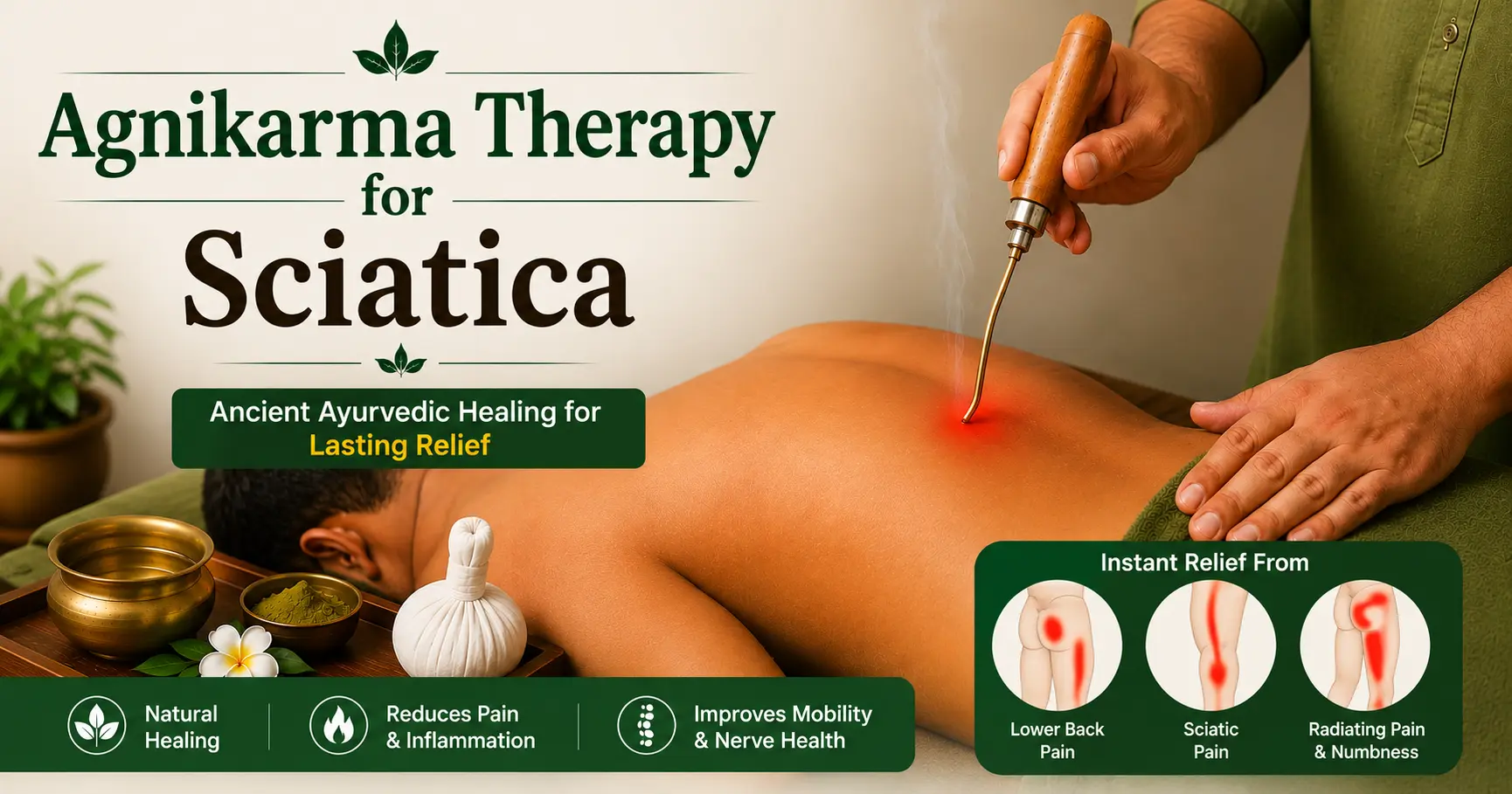
Sciatica — known as Gridhrasi in Ayurveda — is characterised by sharp, shooting or burning pain radiating from the lower back through the buttock, thigh, calf and foot along the sciatic nerve pathway.
Sciatica is one of the most painful and functionally disabling conditions that brings patients to Ayutirth Ayurveda. The radiating nature of the pain — shooting through the leg, often accompanied by burning, numbness, electric sensations and muscle weakness — makes normal walking, sitting and sleeping extremely difficult.
In Ayurveda, Gridhrasi (sciatica) is a Vatavyadhi — a pure Vata disorder characterised by pain following the pathway of the sciatic nerve. Agnikarma is the primary para-surgical treatment for Gridhrasi described by Sushruta.
Unlike oral nerve pain medications, which suppress nerve signalling systemically, Agnikarma for sciatica acts locally on the precise points of nerve irritation — deactivating ectopic pain signalling at the nerve, reducing perineurial inflammation and restoring normal nerve conduction.
Recent onset. Severe radiating pain to calf or foot. Often associated with acute disc herniation.
Pain persisting for months or years. Constant or episodic burning, aching and numbness in the leg.
Sciatic nerve compressed by a tight piriformis muscle. Deep buttock pain radiating down the leg.
Pain radiating down both legs — typically associated with central disc herniation or spinal stenosis.
Joint pain affecting the shoulders, elbows, wrists, hips, ankles and small joints of the hands and feet responds exceptionally well to Agnikarma. Precise application of therapeutic heat at the affected joint restores mobility, reduces inflammation and provides sustained relief.
Joint pain is among the most widespread musculoskeletal complaints in India, affecting people of all ages — from young adults with sports injuries to elderly patients with degenerative arthritis. Pain, swelling, stiffness and restricted range of motion at any joint can significantly impair daily activities, work capacity and quality of life.
In Ayurveda, joint pain (Sandhi Shoola) is understood as a manifestation of aggravated Vata dosha, often combined with Ama accumulation within the joint space and surrounding tissues. Agnikarma is uniquely suited to joint pain because the therapeutic heat penetrates directly to the periarticular structures — the joint capsule, synovium, ligaments and periosteum — where pain and inflammation originate.
Agnikarma is applied to precise Marma points (vital energy junctions) around the affected joint, periarticular trigger points and the joint margins themselves. This targeted approach delivers anti-inflammatory and pain-relieving effects locally without systemic side effects.
Sudden-onset pain, swelling and restricted movement following injury, strain or inflammatory flare-up.
Long-standing pain with cartilage wear, joint space narrowing and recurring stiffness on movement.
Rheumatoid and related inflammatory arthritis causing joint pain, morning stiffness and synovial swelling.
Polyarthritis affecting several joints simultaneously — hips, shoulders, ankles, wrists and small joints.
Adhesive capsulitis, rotator cuff tendinitis and shoulder osteoarthritis — all respond well to Agnikarma at the shoulder Marma points with significant improvement in range of motion.
Tennis elbow, golfer's elbow, wrist arthritis and carpal joint pain effectively resolved with targeted Agnikarma application at periarticular trigger points.
Hip osteoarthritis, avascular necrosis in early stages and chronic hip stiffness — Agnikarma at the hip joint reduces pain and improves gait.
Ankle arthritis, subtalar joint pain, plantar fasciitis and chronic ligament pain at the ankle respond to precise Agnikarma at the local Marma and trigger points.
Interphalangeal joint pain, gout-related joint damage and rheumatoid involvement of small joints managed effectively with fine-point Agnikarma application.
Inter-critical gout pain and chronic tophaceous gout involving multiple joints — Agnikarma combined with Virechana Panchakarma provides sustained relief and reduced recurrence.
Each Agnikarma session at Ayutirth Ayurveda is conducted personally by Dr Harshad Solanki in a clean, professional clinical environment in Gota, Ahmedabad.
Dr Solanki performs a comprehensive clinical examination — range of motion, tenderness, neurological examination including reflexes, straight-leg raise, sensation and motor strength. All available investigations (X-ray, MRI, nerve conduction studies) are reviewed.
The specific points to be treated are carefully identified and marked — Marma points, trigger points within periarticular muscles, joint margins, paravertebral muscles, facet joints, nerve root exit points and the complete sciatic nerve pathway as applicable.
The treatment area is cleansed and a light application of medicated Ayurvedic oil is made. For spinal and sciatic conditions, a brief warm oil massage to the lower back and posterior thigh is performed immediately before the Agnikarma application.
The selected Shalaka (instrument) — heated to the precise therapeutic temperature — is applied to each identified point with a controlled, brief contact lasting a fraction of a second. The procedure takes 10–15 minutes for knee pain; 20–30 minutes for slip disc and sciatica.
Medicated Ayurvedic ghee is applied to all treated points. The patient rests for 15–20 minutes. Small reddish marks at each treatment point typically heal within 3–5 days and leave no permanent marks.
Dr Solanki provides personalised dietary and lifestyle guidance and prescribes appropriate Ayurvedic medicines. Follow-up sessions are scheduled at weekly intervals. Progress is assessed at every session and the plan adjusted accordingly.
Understanding how Agnikarma compares to the alternatives can help you make an informed decision about your care in Ahmedabad.
| Criterion | Agnikarma Therapy | Steroid Injections | Physiotherapy | Surgery |
|---|---|---|---|---|
| Nature | Natural, Ayurvedic | Pharmaceutical | Physical | Surgical |
| Pain Relief Speed | ✔ Within 1–3 sessions | ✔ Immediate | ✘ Weeks to months | ✔ Post-recovery |
| Duration of Relief | ✔ 12–24 months+ | ✘ 4–12 weeks only | Varies widely | ✔ Long-term if successful |
| Treats Radiating Pain | ✔ Yes — entire nerve pathway | Partially | Partially | ✔ If decompression successful |
| Side Effects | ✔ Minimal | ✘ Cartilage damage with repeat use | ✔ Minimal | ✘ Nerve damage, infection risk |
| Hospitalisation | ✔ Not required | ✔ Not required | ✔ Not required | ✘ 3–7 days required |
| Cost | ✔ Affordable | Moderate per injection | Ongoing cost | ✘ Very high |
| Addresses Root Cause | ✔ Yes — Vata & nerve inflammation | ✘ Symptomatic only | Partially | Mechanically only |
An ancient Ayurvedic procedure that modern patients are rediscovering — offering a unique set of advantages that no other approach can replicate.
Many patients advised for knee replacement, discectomy or spinal decompression surgery have avoided or significantly delayed the procedure through a complete course of Agnikarma.
Most patients report significant reduction in pain — often from 7–8/10 to 2–3/10 — after just the first 3 sessions, including the debilitating radiating leg pain of sciatica.
For sciatica and slip disc, Agnikarma treats the entire nerve pain pathway — not just the back. This makes it uniquely effective at eliminating the radiating component of nerve pain.
Unlike repeated steroid injections or long-term nerve pain medications — both with significant side effects — Agnikarma achieves its effect entirely through therapeutic heat.
Walking distance, stair-climbing, ability to sit for extended periods, sleep quality and daily activities all improve progressively as the course continues.
Classical Ayurvedic texts state that conditions properly treated by Agnikarma do not recur. Clinical experience confirms relief lasting 12–24 months in the majority of patients.
BAMS · Keralian Panchkarma Specialist · Founder, Ayutirth Ayurveda
Dr Harshad Solanki is one of Ahmedabad's most experienced Ayurvedic physicians for musculoskeletal, spine and nerve disorders, with over 13 years of specialised clinical practice in Agnikarma therapy and Panchkarma. He has helped hundreds of patients across Ahmedabad and Gujarat achieve lasting relief without surgery.
Dr Solanki completed his BAMS degree and subsequently pursued advanced postgraduate training in Keralian Panchkarma — gaining deep expertise in classical Agnikarma technique and the full range of complementary Panchkarma protocols.
Hear directly from patients who experienced lasting relief from knee pain, slip disc and sciatica through Agnikarma at Ayutirth Ayurveda.
A patient shares their experience after a complete course of Agnikarma knee therapy at Ayutirth Ayurveda, Gota, Ahmedabad.
A patient shares their experience after Agnikarma treatment for sciatica and disc herniation at Ayutirth Ayurveda, Gota, Ahmedabad.
Answers to the questions we hear most often from patients considering Agnikarma therapy at Ayutirth Ayurveda.
For many patients, yes. A significant proportion of patients who have been advised for knee replacement — particularly those with Grade 2 and Grade 3 osteoarthritis — have achieved sufficient pain relief and functional improvement through Agnikarma therapy to comfortably delay or entirely avoid surgery. Even for Grade 4 (bone-on-bone) arthritis, Agnikarma can meaningfully reduce pain and improve quality of life.
The key is early treatment. We strongly encourage anyone who has been advised for surgery to consult with Dr Solanki for an honest, personalised assessment before making a decision.
Yes — for most patients with disc herniation who have not yet developed progressive neurological deficit (foot drop or loss of bladder/bowel control). Agnikarma applied to the specific spinal and nerve root points reduces nerve root inflammation, relieves paraspinal muscle spasm and addresses the Vata imbalance underlying disc herniation.
If you are experiencing rapidly progressive leg weakness, loss of sensation, or bladder/bowel symptoms alongside your disc pain, please consult your spine surgeon immediately — these are signs that require urgent surgical evaluation.
Most patients experience meaningful reduction in the burning, shooting radiating pain within the first 2–3 Agnikarma sessions. The improvement in leg pain often begins even before the back pain fully resolves. By sessions 5–7, the majority of patients find they can walk, sit and sleep significantly more comfortably.
The number depends on the condition and its severity. As a general guide: knee pain Grade 1: 3–5 sessions; Grade 2: 5–7; Grade 3: 7–10; Grade 4: 10–14. Slip disc: 7–12 sessions. Sciatica: 8–14 sessions. Sessions are spaced one week apart. Dr Solanki reviews progress at every session and adjusts the plan accordingly.
The procedure causes a brief, momentary sensation of sharp heat at each treatment point — lasting only a fraction of a second per point. Most patients find it significantly more tolerable than they expected. No sedation is required. After the session, the treated area may feel warm or slightly tender for 24–48 hours. Most patients are able to walk out of the clinic, drive home and resume light daily activities.
Yes — and this is our standard approach at Ayutirth Ayurveda. For knee pain, Agnikarma works most effectively when combined with Janu Basti and Pinda Sweda. For slip disc and sciatica, the combination of Agnikarma and Kati Basti in the same session is significantly more effective than either alone.
Agnikarma is generally safe for elderly patients and can be particularly valuable for this group who often cannot tolerate surgery or long-term NSAID use. Diabetic patients with poorly controlled blood sugar require special caution. Dr Solanki evaluates each patient thoroughly before proceeding and for well-controlled diabetics, Agnikarma can be performed safely with appropriate precautions.
Ayutirth Ayurved & Panchkarma Hospital is located in Gota, Ahmedabad — accessible from Chandkheda, Motera, Nirnaynagar, Sola, Thaltej, SG Road and Science City Road. Please see the clinic map below for directions, or call us at +91 98246 54364 for route guidance.
Ayutirth Ayurved & Panchkarma Hospital
Gota, Ahmedabad, Gujarat — 382481
Mon – Sat: 10:00 AM – 1:30 PM,
5:00 PM – 8:30 PM
Sunday: 10:00 AM – 2:00 PM (appt only)
Accessible from Chandkheda, Motera, Sola, Thaltej, SG Road, Nirnaynagar & Science City Road
Consult Dr Harshad Solanki for personalised Agnikarma therapy at Ayutirth Ayurved & Panchkarma Hospital, Gota, Ahmedabad — without surgery or steroids.